


"Teaching every child to read and spell is too important to be shaped by social media algorithms, arguments, and toxicity."
Emma Hartnell-Baker MEd SEN
The Neurodivergent Reading Whisperer®
Why I’m Using Social Media Less
I’m using social media less and less because the way reading and spelling are often discussed online doesn’t reflect how many children actually learn.
Short videos reward quick tricks. You’ll see teachers analysing words syllable by syllable, explaining spelling rules like the floss rule, or telling children what happens before or after certain vowel sounds. These approaches work well in a 60-second reel.
But they don’t work for many children. Those who 'get it' tend to be children who already know what the word is.
For learners with weaker phonemic awareness or phonological working memory, analysing words piece by piece or memorising spelling rules simply creates confusion. Instead of helping children read, it can put them off reading and spelling altogether.
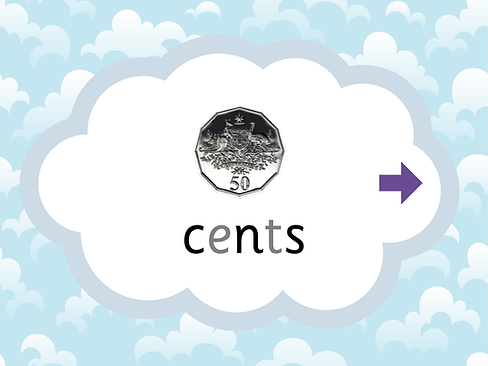
Word mapping should be a kick-start to self-teaching, and it should begin with speech, not print, and explicit instruction be finished quickly because there are too many correspondences for children to be taught, as seen in the Spelling Clouds.
Children need to see how the sounds they say connect to the letters on the page. When that mapping is visible from the start, they don’t need endless rules or word-by-word analysis. They can figure out the alphabetic code for themselves.
That is exactly what the self-teaching hypothesis predicts. Once children can connect speech sounds to graphemes, they begin teaching themselves new words through reading (Share, 1995).
That’s what Speedie Readies, One, Two, Three and Away! with the Code Overlay is designed to do.
When we introduce children to the alphabetic code in a way that makes the code visible from the start, they are reading for pleasure before the end of Year 1. They don’t need explicit phonics or spelling instruction beyond KS1 (Grade 2).
When I sent the short video below to a school leader in England who had heard about Speedie Readies and wanted a quick overview, he immediately asked if he could share it with his team because he was so excited.
Over 20 schools in England have now asked to be part of the pilot.
Those working in English schools understand the real impact of synthetic phonics. Increasingly, many are asking for phonics reform, not because phonics itself is wrong, but because of the way phonics is currently being taught.
Speech Sound Monsters are a game-changer for the one in four capable children who still cannot read by age 11 after years of synthetic phonics.
We can prevent this upstream.
English Is Not a Simple Alphabetic Code
English is an opaque orthography. The relationship between letters and sounds is not straightforward.
For example, the grapheme ch represents different sounds in chick, chef, machine, and Christmas.
At the same time, the first speech sound in chick can also be spelled with other graphemes, such as t in future.
Children are expected to figure this out while learning to read.
Making the Alphabetic Code Visible
Phonemies (Speech Sound Monsters) simply make the code visible.
They show the sound value of each grapheme, while our Code Mapping algorithm shows which letters are graphemes using black and grey.
The technology instantly shows the code for any word.
Adults do not need to be present. The child can explore the alphabetic code independently and receive help when they need it.
This matters for adults as well as children. Huge numbers of people struggle to connect phonemes and graphemes even though they are otherwise skilled readers. Discovering this was one of the starting points for my doctoral research.
The Problem Children Face in School
Avery has just started school.
He will be shown the usual phonics charts with a picture of a chick on a card representing ch.
Can you imagine how confusing that becomes when he encounters chef, machine, or Christmas?
Or when he is told “e says /e/ as in egg”, yet the e in his own name maps to the schwa.
Children are expected to cope with these contradictions while learning to read.
What Phonemies Do
Phonemies are speech sound symbols aligned with phonemes that show the sound value of each grapheme.
Children simply follow the monster sounds to say the word.
In this sense they function much like phonetic symbols used by people learning English who want to check how a word is pronounced. Even when pronunciation varies across accents, phoneme symbols provide a universal sound code.
Phonemies give children access to that same clarity, in a way that toddlers can understand.
Some adults seem strangely angry about that.
Why This Matters for the One in Four
Around one in four children start school with weak phonemic awareness and phonological working memory. These children are at high risk of struggling to connect letters and sounds through phonics.
For them, this is not a small issue.
It can be the difference between guessing and reading.
For pattern-seeking autistic brains in particular, this approach shows how the system works instead of presenting disconnected fragments.
You have already seen this with Alfie. After more than two years of Read Write Inc, he still had no understanding of how letters and sounds connected. Now he is reading.
Reducing Cognitive Load
Phonemies and Code-Mapped words reduce cognitive load.
It’s that simple.
By the end of the Introductory Readers, often earlier, children no longer need them because their brains are self-teaching.
We have prevented the dyslexia paradox.
Every child in Year 1 can read, and more importantly, they want to read.
The Village With Three Corners books make that possible because children can finally read them independently.
Children Want to Read
We are also addressing the steep decline in reading for pleasure.
With respect, children do not want to spend their time analysing words.
Children want to read stories.
I uploaded the video below as an unlisted YouTube video and shared it on Facebook. https://youtu.be/QyK7aVbNyx8
I refuse to have it turned into a reel and judged “unworthy” by the Facebook algorithm because it is not a quick fix or designed to generate drama.
I am using Facebook less and less.
At the same time, I am now supporting more schools than ever.
The world is changing, and social media is becoming increasingly toxic. It is getting in the way of real, sustainable change.
Emma Hartnell-Baker

.png)
.png)
Use the Monster Spelling Piano app to kick-start phonics. From the end of term 1 of Reception, or when children are confident with the Green and Purple Code Levels, start Pre-Reader 1: Red.
Upstream Phonics Screening and Support for the 1 in 5 at Risk
Phonics Screening Check Support from the Upstream Team
We will help you understand why at least 1 in 5 struggles to pass the PSC or reach the self-teaching phase and read by the end of KS2.
Exploring unfamiliar words:
Speech to print to bond speech sounds, spelling and meaning together.
Print to speech to demonstrate mastery.
Speech-to-print mapping enables the brain to develop the ability to isolate, segment and blend speech sounds in words.
What matters most is this: are children reading for pleasure, quickly and easily?
Phonics should kick-start the process so that children begin self-teaching as early as possible, according to each child’s needs. Children in school need to be reading independently by age 7 to prevent the dyslexia paradox.
If children aren’t reading for pleasure by age 7, schools will need to teaching things in KS2 that brains find much easier to understand through self-teaching in KS1 using real books they are interested in.