


Reduce the Cognitive Load with The Code Overlay!
With The Code Overlay, we mirror how a skilled reader’s brain maps speech to print.
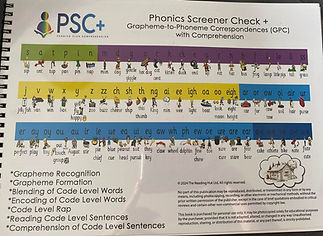
Only around 100 GPCs are covered in a phonics programme. This is the SSP Core Code
Skilled readers rely on an internal, invisible mapping between speech and print that beginners do not yet have. When that mapping is missing or incomplete, reading breaks down, even if the person has good phonics knowledge or high literacy.
When an unfamiliar word is encountered, such as gallimaufry, a reader cannot automatically add it to their internal system unless they know how it is pronounced and what it means. Adults solve this by checking IPA, a dictionary, or Google. Children usually cannot.
Teachers may recognise some words, skip others, approximate pronunciation, or gloss over meaning, but that is not the same as being able to pronounce the word accurately, explain how the spelling maps to sounds, or model the word for a learner. That distinction matters for teaching reading.
The video uses a deliberately constrained example to surface this hidden problem. It shows what it feels like when the internal code is not available, and why guessing, skipping, or relying on prior knowledge is not the same as reading with confidence.
For some learners with strong phonemic awareness, seeing and hearing the code once may be enough to store the word securely. For others, particularly learners with dyslexia or speech and language differences, that information does not automatically stick. These learners need repeated, structured access to the code through spelling and mapping routines that actively secure the word in memory.
The technology shown provides an on-demand code overlay that makes this invisible information visible and audible. Users can click to see which letters work together, hear the correct pronunciation, and access the same support whether they are children or adults, readers or spellers, speaking or non-speaking. It supports both one-off access for confident learners and repeated mapping for those who need the code reinforced over time.
No teaching is required. The support is available at the point of need.
With The Code Overlay, we mimic the process a skilled reader’s brain uses to map words. Skilled readers automatically connect speech sounds, spelling, and meaning as they read and spell, even when they encounter unfamiliar words. Many children cannot do this without support. By making the word code visible, The Code Overlay removes guessing and memorisation, allowing children to see which letters are graphemes and the sound value each one represents. This supports self-teaching, helps words stick in the brain’s word bank, and enables children to read and spell with confidence. Get started with a monthly membership!
The Code Overlay isn’t a physical overlay placed over text, like the coloured overlays sometimes used by those supporting dyslexic students. We do not use coloured overlays. Coloured overlays aim to make print easier to look at, but they do not address the underlying difficulty many dyslexic learners experience, which is struggling to connect speech sounds with letters.
The Code Overlay therefore offers clarity for children learning to read and spell by making clear which letters are functioning as graphemes and the sound value they represent in that word. This is achieved using our ground-breaking word mapping technology. With The Code Overlay, we mirror how a skilled reader’s brain maps speech to print.
For the first time, dyslexic learners can see the sound–print code with reduced cognitive load, because Phonemies are a direct representation of speech sounds, acting as phonetic symbols rather than letters or cues. Anyone, including adults learning to pronounce English words, can immediately see which letters are functioning as graphemes and the sound value they represent in that specific word.
This clarity supports orthographic mapping, which is how children learn to read and spell well. It is useful for all learners, but essential for the 1 in 4 who do not move into self-teaching through phonics programmes alone.
In England, where phonics programmes are mandated for all children, these learners can often be identified as early as Term 1 of Reception if a strong focus on phonemic awareness and phonological working memory, such as the Speech Sound Play plan, is not introduced first. Even after two years of phonics instruction, these learners do not reach the stage where they can independently figure out unfamiliar words, and they do not develop the strategies that skilled readers typically build early on, often with a kick-start of phonics.
Many children do become skilled readers with very little formal phonics because they already have strong phonemic awareness. For those who struggle, making the sound–print mapping visible is what enables progress. If they don't know it, show it with The Code Overlay.
Words can be difficult to sound out and to spell, so we show the code by making visible which letters are functioning as graphemes and the sound value they represent in that specific word. Because we use Phonemies to function as IPA phonetic symbols they can be altered for accents!

Show the Code using Mapped Words®
When we make the sound–print code visible in written English it like using a Code Overlay!
Words in written English can be difficult to sound out and spell because the code is not obvious. The letters are visible, but which letters are working together as graphemes, and the sound value they represent in that word, is often hidden.
That’s why we use what we think of as Code Overlays. We are making the code transparent.
The Code Overlay makes the structure of a word visible by showing:
-
which letters are functioning as graphemes
-
the sound value each grapheme represents in that specific word
Nothing about the word changes. The spelling stays the same. What changes is that the code becomes visible.
With The Code Overlay, we mimic the process a skilled reader’s brain uses to map words.
Why The Code Overlay matters
In English:
-
the same sound can be spelled in many different ways
-
the same letters can represent different sounds in different words
-
relying on sounding out letters alone often leads to guessing or errors
When the code is not visible, learners are expected to infer how speech maps onto print. For many learners, especially those who struggle with reading or spelling, this creates unnecessary cognitive load.
The Code Overlay remove that burden by revealing the word’s internal structure.
Where Phonemies fit
Phonemies are visual characters that represent speech sounds only.
They are not letters.
They are not pictures or mnemonics.
Phonemies make the sounds in a word visible, independently of how those sounds are spelled. When used alongside a Code Overlay, learners can clearly see:
-
the sounds that exist in the word
-
which letters are representing each sound
-
how speech and print align in that word
This sound-first clarity supports accurate word mapping in both reading and spelling.
How showing graphemes and sound values helps learners
Showing which letters are graphemes and their sound value:
-
removes the need to guess how a word works
-
ensures every sound in the word is accounted for
-
supports accurate decoding and spelling
-
reduces reliance on memorisation or rules
-
enables independent problem-solving with unfamiliar words
Instead of asking learners to work out the code themselves, the code is made visible.
Designed for learners who need clarity and those who are being held back
The Code Overlay with Phonemies is especially helpful for:
-
dyslexic learners
-
children with speech, language and communication needs
-
neurodivergent learners
-
AAC users
-
learners who do not benefit from print-to-speech phonics taught at one pace
-
children who are being held back from exploring the whole code, as following a rigid phonics programme
By showing how speech maps onto print in each word, learners gain a clear, reliable way to read and spell that facilitates self-teaching
When used with The Spelling Routine every child has the opportunity to bond speech sounds, spelling and meaning! Please do use the TheSpellingRoutine.com site to learn high frequency words with words that have this 'Code Overlay'!
The best way to ensure that every child learns to read and spell with independence and confidence is to ensure that they have good phonemic awareness, introduce the Core Code and when the children reach the Yellow Code Level start the mapped One, Two, Three and Away books!