


Spelling Simplified!
If they don't know it, SHOW IT! Then store the word in the orthographic lexicon using The 60 Second Spelling Routine with Mapped Words®, designed by Miss Emma MEd SEN
The Neurodivergent Reading Whisperer®
Our Show the Code approach centres on supporting the Self-Teaching Word Mapping Brain.
This work focuses on how children transition into independence, and how self-teaching emerges through meaningful reading and spelling experiences.
This matters because current DfE policy, and a growing number of organisations seeking to replicate it overseas, including in Australia and the USA, assumes that an early, explicit, systematic phonics start will lead every child into self-teaching. These assumptions are drawn from reading science, but are being interpreted narrowly for instruction.
In practice, what is currently happening does not reliably facilitate self-teaching or deep reading. Around one in four children do not make that transition, even by age eleven. They may learn elements of the code, but without sufficient opportunities to read and spell in ways that consolidate word knowledge, learning does not become self-sustaining. More phonics instruction is not the answer.
In reading science, spelling is not optional or secondary. It is one of the strongest drivers of self-teaching and orthographic learning. That is why we train practitioners to use The Spelling Routine with Mapped Words, so that word knowledge is stabilised and available for fluent reading.
Reading and spelling are not separate skills. They are the mechanism by which children store words, build stamina, and move into deep reading.
In the member area, we show how children learn to read in the real world, including cases where word mapping instruction before age seven was minimal or absent. Progress is still possible, but it is harder and depends heavily on intrinsic motivation, particularly the child’s desire to read.
Motivation can increase when word mapping becomes easier, and when the words and texts are interesting to the learner. Word mapping technology makes this possible because the code is made visible, and prior GPC knowledge is not a factor in the decision-making process.
Spelling Tools that engage Dyslexic Minds
The 60 Second Spelling Routine


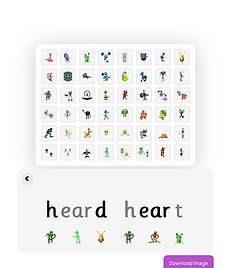
Apply to join a Speedie Spelling pilot and access the ground-breaking MyWordz® Word Mapping technology for one term. A teaching assistant will receive access to the training and support area and work with dyslexic learners on a 1:1 basis. Support is provided by Level 7 SEN and SpLD specialists and assessors.
With your consent, feedback and anonymised usage data will be collected and may be used to support a submission to the Education Endowment Foundation (EEF) as part of ongoing evaluation and evidence building.

